
Hellen Njiwa sets out how stronger feasibility studies, institutional readiness and earlier engagement with investors can help African water projects move towards financing
Interest in African Water Facility support moved quickly from the conference room to the marketplace in Kigali after Hellen Njiwa, Principal Monitoring, Evaluation and Project Portfolio Management Expert at the African Water Facility (AWF), presented the Facility’s approach to preparing water and sanitation projects for investment.
Njiwa was speaking during D6.7 – Creditworthiness and innovative finance for water utilities, part of the Systems Reform and Investments Marketplace at the Africa Water and Sanitation Systems Leadership Symposium. The session took place on 19 August and brought project preparation and financing institutions into direct discussion with utilities and other sector actors.
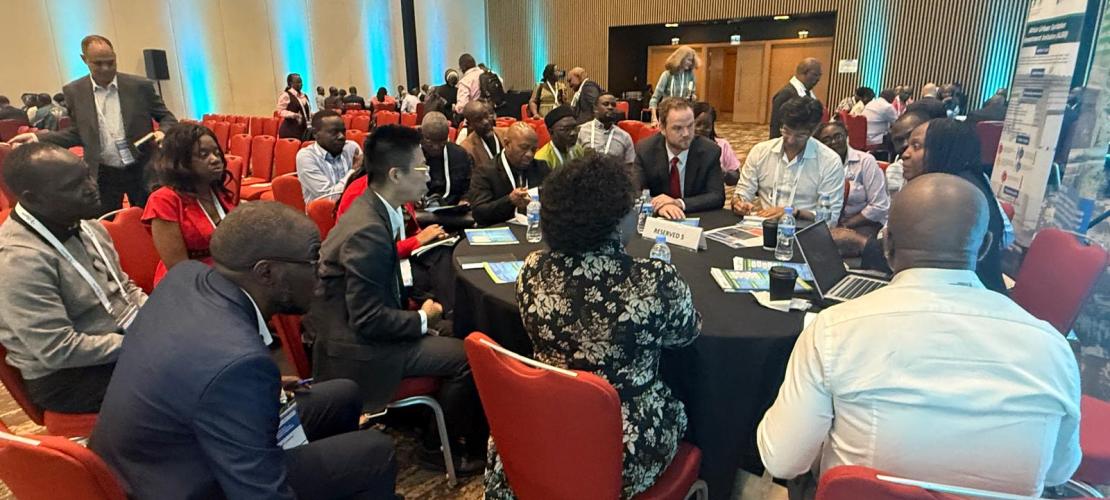
Following her presentation, participants gathered at the AWF marketplace table to continue discussions on project preparation, financing opportunities and the Facility’s 2026 Call for Proposals.
The strong follow-up interest reflected the central argument of Njiwa’s intervention: many priority water and sanitation investments struggle to attract finance because the projects, institutions or financing arrangements behind them are not sufficiently prepared.
Preparation comes before the financing conversation
Njiwa pointed to several gaps that can prevent priority investments from progressing.
Projects may lack complete feasibility studies, technical and financial analysis or other preparation required by potential financiers. Institutions may also need stronger governance, regulatory systems, financial management and internal capacity before they can manage larger investments effectively.
Even where studies exist, she noted, investors may have been engaged too late in the preparation process, leaving project sponsors with proposals that do not adequately respond to financing requirements.
The result is a project that may address a genuine development need but still cannot move readily into financing.
For AWF, closing that preparation gap is a central part of its mandate.
“We help countries prepare these feasibility studies. We help countries create an enabling environment, develop master plans and strengthen their capacity to build an investment case,” Njiwa told participants.
She added that the Facility is increasingly seeking to connect project preparation more deliberately with the financing that should follow.
“We are not just looking at preparation, but we are trying to connect governments to investors to make sure that we mobilise enough resources for developing water infrastructure in Africa.”
AWF Strategy puts 70% of effort into project preparation
Njiwa used the session to present the AWF Strategy 2026–2030, which places project preparation at the centre of the Facility’s work.
Under the Strategy, 70% of AWF resources are directed towards project preparation to catalyse investment, while 20% focuses on securing water and sanitation finance and investment. The remaining 10% supports the institutional performance of the Facility.
She described an AWF approach that starts with helping governments, utilities and other eligible institutions identify priority investments and then moves through project preparation, institutional strengthening and engagement with financing partners.
The Facility’s project-preparation support can include feasibility studies, detailed design, safeguards, financial analysis and work to strengthen the conditions required for implementation.
AWF is also seeking to engage financiers earlier so that project preparation is informed by the requirements of potential investors rather than waiting until studies are complete before financing conversations begin.
The Strategy sets a target of EUR 800 million in investment financing secured by 2030, alongside a 1:30 preparation-to-finance leverage target and an ambition for 75% of AWF-prepared projects to reach financial close.
Call for Proposals gives participants an immediate entry point
Njiwa concluded her presentation by directing participants towards an immediate opportunity to engage the Facility.
AWF’s 2026 Call for Proposals remains open until 10 September 2026 and offers grants of up to EUR 1 million per selected project.
The Call is open to eligible Regional Member Countries, public institutions and implementing agencies, as well as regional and transboundary organisations, including basin organisations.
Njiwa encouraged participants to review the Call, assess their eligibility and engage AWF on priority investments requiring project-preparation support.
“Engage us so that we can help you prepare bankable projects that can be attractive to investors and help you mobilise resources to build water infrastructure in Africa,” she said.
A QR code displayed as part of the presentation provided participants with direct access to information on the Call for Proposals.
The crowd that gathered at the AWF table after the session provided an immediate indication of the interest generated by that invitation, with participants seeking further information on eligibility, project preparation and the type of support available through the Facility.
Bringing project sponsors and finance closer together
The Systems Reform and Investments Marketplace is designed to create direct interaction between institutions facing reform or investment challenges and organisations able to provide technical assistance, project preparation or financing.
For AWF, that format closely matches the direction of its new Strategy: prepare stronger projects, strengthen the institutions behind them and bring financing partners into the process earlier.
Njiwa’s intervention also followed a broader discussion in Kigali around the quality of African water investment plans and the level of preparation required to convert them into financeable projects.
The Facility will continue using the symposium to engage governments, utilities, development partners and financing institutions on potential projects, partnerships and investment opportunities.