
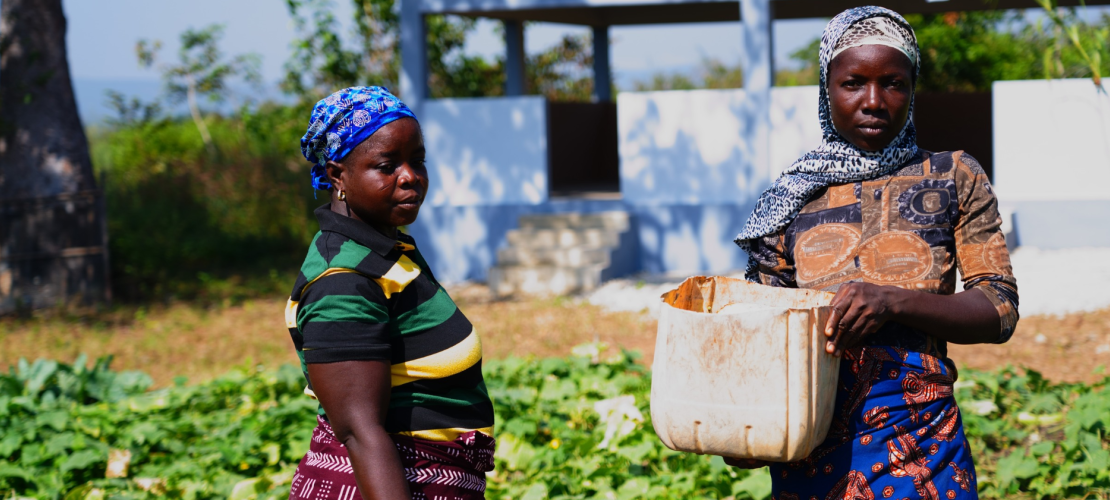
SOKODÉ, Togo – Atchanta Aïcha knows what happens when her cabbages do not get enough water. They remain small, while cucumbers can turn bitter under the hot sun. For the 37-year-old mother of five, a poor harvest matters. The vegetables she grows provide an income and help feed her family.
But there is something unusual about Aïcha's garden. It sits beside a facility that receives and treats waste collected from household toilets.
How did a place built to handle human waste become a source of food and employment for families in Sokodé?
Aïcha works alongside Kamina Adjeua and other market gardeners on land at the city's faecal sludge treatment station. They cultivate cabbages, lettuce, cucumbers and other vegetables, earning money from their work and taking some of the produce home for their families.
For Aïcha, gardening was already familiar. Her husband worked as a gardener, and she followed him into the activity, helping to cultivate, harvest and sell vegetables.
Her opportunity to work at the treatment station came through the Fédération des Comités d'Assainissement de Quartier de Sokodé (FeCAQSo), a women-led organisation involved in managing sanitation services in the city.
When FeCAQSo organised a meeting to recruit women for the market-gardening activity, Aïcha attended. She was accepted and began working on the plots.
“I work to earn money,” she explains. “I also earn money to prepare meals at home.”
That income helps Aïcha meet everyday household needs. The vegetables she can take home offer an additional benefit, giving her something to prepare for her children.
Adjeua shares her appreciation of the opportunity. Both women have found work in a place whose main purpose has little obvious connection with growing food.
The journey from a household toilet
The connection begins with a sanitation problem Sokodé has faced for years.
Following a cholera outbreak in 2013, efforts to improve sanitation in the city gained particular importance. Many households lacked adequate toilets, and disposing of human waste safely remained a challenge.
Building toilets was necessary, but what would happen when they filled up? Without reliable collection and treatment services, the waste could still end up in the environment.
Through the African Water Facility (AWF), the African Development Bank supported an earlier initiative, Toilets for All in Sokodé, which helped establish a more organised sanitation system.
The Bank's subsequent investment, the Promotion of Inclusive Urban Sanitation in Togo project (PAICUT), builds on that work. Financed through a €1.25 million AWF grant and implemented by the Société de Patrimoine Eau et Assainissement en milieux urbain et semi-urbain (SP-EAU), the project supports improvements across the sanitation service chain.
It covers more than household toilets.
When a toilet pit or septic tank needs emptying, a specialised truck collects the faecal sludge and transports it to the city's treatment station. There, the waste undergoes treatment instead of being discharged untreated into the environment.
The system also supports the recovery of treated sanitation by-products for agricultural use, including soil-improving materials. PAICUT strengthens this work through investments in equipment, treatment infrastructure and activities such as market gardening.
FeCAQSo is an important local partner in this system. Besides helping organise sanitation services, the federation has brought women into activities that create opportunities beyond waste collection and treatment.
This is the connection between the toilets of Sokodé and the vegetables growing on Aïcha's plot.
An investment intended to improve sanitation has also helped create opportunities for people to earn a living and contribute to their families' food needs.
Aïcha has one pressing concern
Aïcha enjoys the gardening activity. She speaks proudly about the vegetables and the growing methods used on the site, which she describes as natural.
She wants the work to continue. She also hopes the women will eventually earn more.
But throughout her interview, she returns to one problem: the garden does not receive enough water.
“In our garden, we lack water. What we need is water,” she says.
The irrigation pipes, she explains, deliver too little water for the vegetables. She worries about the effect on the crops, particularly during periods of strong sunshine.
Without sufficient watering, cabbages do not develop properly, and cucumbers can lose their quality. These are difficulties she understands from her daily work.
Aïcha believes larger pipes could help. Her concern highlights the need to assess the irrigation system and identify how to provide a more reliable water supply to the plots.
For her and Adjeua, improving the water supply would help protect an activity that provides both earnings and food for their households.
An experience other cities can learn from
Beyond Sokodé, PAICUT also supports the preparation of sanitation plans and priority investment projects for nine other urban centres in Togo.
The objective is to help these cities plan better sanitation services and attract financing for future improvements, drawing on lessons from Sokodé.
One of those lessons is that sanitation cannot end with the construction of a toilet. Collection, transport, safe treatment and the management of recovered materials all matter. So do the people whose work keeps those services running.
At the treatment station, Aïcha and Adjeua are among those experiencing the wider benefits of that approach.
They have found an opportunity to earn money and grow vegetables for their families in a place most people would never associate with food production.
Aïcha's ambition now is to keep the garden productive, improve her earnings and continue providing for her five children.
And when asked what would make the biggest difference to her work, her answer remains simple.