
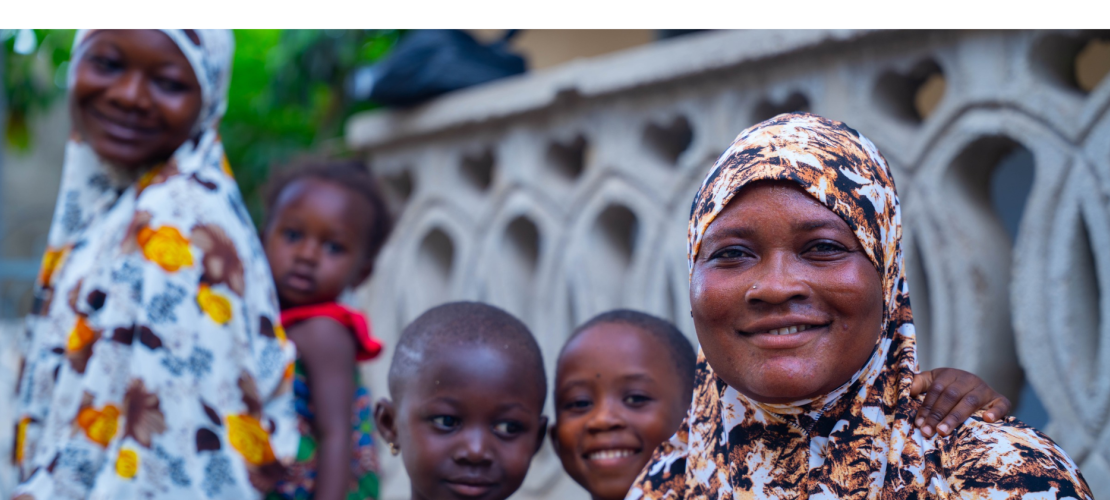
For years, when Riyana Ousmane or a member of her family needed to go to the bathroom, they walked to the nearby river to relieve themselves because they had no toilet at home.
The 31-year-old resident of Faune, a neighbourhood of Sokodé in central Togo, remembers this as part of everyday life for her, her family as well as for many others in her community.
“Before, we did not have a proper toilet at home. We used the river you can see, like many other people around us,” Ousmane said.
The absence of a toilet at home was much more than convenience. Outdoor or open defecation meant living with limited privacy and with the consequences of an unsanitary environment close to where families lived.
That fear was rooted in Sokodé’s own recent history. In 2013, the city was the epicentre of three cholera outbreaks. At the time, only 34% of households in Sokodé had a toilet at home, leaving many residents dependent on public latrines, open defecation or other unsafe sanitation practices. The outbreak drew attention to this community’s urgent need to improve sanitation in the city and was a catalyst for local authorities, community leaders and the Government of Togo to develop a more comprehensive approach to managing human waste, with support from the African Water Facility.
That same year, the African Development Bank Group, through the African Water Facility, supported the launch of the “Toilets for All in Sokodé” project, which combined household toilet access with faecal sludge collection, treatment and reuse.
Today, Ousmane’s family has an improved toilet - a facility designed to hygienically separate human excrement from human contact, preventing waste from exposing people or the surrounding environment to disease - at home. The Promotion of Inclusive Urban Sanitation in Togo project builds on and strengthens the sanitation model established through the earlier “Toilets for All in Sokodé” project. It also applies lessons learned from Sokodé to prepare sanitation investments in nine other urban centres. The current project is supporting delivery of 80 additional household toilets in Sokodé.
“For the family, it is a great relief. The children go to hospital much less often,” Ousmane said.
Her experience reflects what access to sanitation can mean at household level: greater privacy, dignity and the reassurance of having a toilet within the home.
The Promotion of Inclusive Urban Sanitation in Togo project approach in Sokodé goes beyond constructing toilets. It strengthens the entire sanitation services process, helping households access sanitation services while improving how communities collect and treat faecal sludge, as well as make use of treated by-products such as organic manure produced from treated faecal sludge for agricultural use.
“This is a practical demonstration of the African Development Bank Group’s Four Cardinal Points strategic vision, particularly our priority to build resilient infrastructure and competitive value chains. By investing across the entire sanitation service system, we are improving services for families like the Ousmanes while creating systems that cities can sustain, strengthen and replicate,” said Mtchera Johannes Chirwa, Director of the Water Development and Sanitation Department at the African Development Bank.
The African Development Bank finances the project through the African Water Facility, as part of the Africa Urban Sanitation Investment Initiative. The African Water Facility is is a special multilateral initiative and project preparation fund hosted and managed by the African Development Bank Group. The Facility launched the Africa Urban Sanitation Investment Initiative in 2024, as a new financing window addressing the growing needs for basic or improved sanitation services in Africa’s urban areas.
The women-led civil society organization Fédération des Comités d’Assainissement de Quartier de Sokodé, roughly translated as Federation of Neighborhood Sanitation Committees of Sokodé, plays an important role in that system. The organisation has been involved in promoting household sanitation, collecting faecal sludge and supporting the reuse of treated material in agriculture.
This means that what begins with a household toilet such as Ousmane’s connects to a much wider system: waste must be collected safely, transported, treated and, where possible, turned into a resource rather than discharged into the environment.
“Sanitation is not only about building infrastructure. It is about making sure that people can use safe services throughout the entire sanitation chain, from the household to collection, treatment and reuse,” said Lovasoa Christine Razanamahandry-Allanaïssem, Principal Sanitation Specialist at the African Water Facility.