
N’Djaména is expanding quickly, while sanitation services have not kept pace. Most households rely on on-site sanitation systems, and the collection, transport and treatment of faecal sludge remain poorly organised. Informal disposal is common, and flooding further complicates the situation, particularly in areas already exposed to poor sanitation services.
The African Water Facility (AWF) is working with the Government of Chad this week to identify how these challenges can be addressed through the Africa Urban Sanitation Investment Initiative (AUSII).
The mission goes beyond identifying a single project. It is examining the main constraints affecting urban sanitation in Chad and the interventions needed over time, from stronger institutions and regulations to project preparation and future infrastructure investment.
The mission was led by Djibril Diagne, Principal Water and Sanitation Engineer in the African Development Bank’s Water Development and Sanitation Department (AHWS), with Lovasoa Christine Razanamahandry, Principal Sanitation Specialist at the African Water Facility. The mission includes discussions with government authorities and technical consultations with institutions, municipalities, sanitation operators, civil society and development partners.
On 15 September 2026, the AWF delegation was received by Chad’s Minister of Water and Energy, Passale Kanabé Marcelin. Discussions focused on the country’s sanitation priorities, institutional needs and opportunities to strengthen technical and investment support for the sector.
The Minister welcomed AWF’s engagement and reaffirmed the Ministry’s commitment to improving sanitation services in line with national development priorities.
“Sanitation must now be considered not as a secondary intervention, but as an essential investment in health, productivity, the environment and development. This workshop is not simply about presenting the results of a diagnostic study. It is about moving to a new stage, that of programming and mobilising the financing necessary for the transformation of the sector,” said Passale Kanabé Marcelin, Chad’s Minister of Water and Energy.
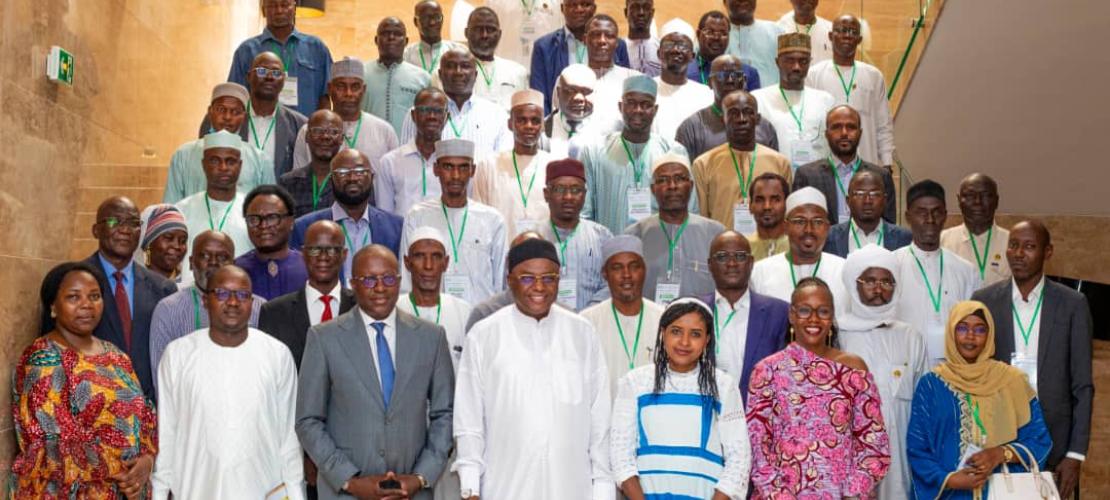
The consultations continued on 16 September with a working session to review the findings of the AUSII urban sanitation diagnostic for Chad.
The session provides an opportunity to test the findings against the experience of national stakeholders, identify gaps that still need to be addressed and agree on the priorities that should guide the next phase of support. Participants are also examining which interventions can move forward first and which require further technical or institutional preparation.
The diagnostic points to weaknesses across the sanitation chain. In N’Djaména, sanitation is largely based on on-site systems. The city has no adequate facility for the treatment of faecal sludge, and informal disposal remains common. Flooding further complicates the situation, especially in areas already exposed to poor sanitation services.
The challenge is therefore not limited to infrastructure. Better planning, clearer institutional responsibilities, stronger service providers and a more realistic pipeline of investments will also be needed if sanitation services are to improve as the city grows.
“The mission is helping us work with the Government and other sector actors to identify what needs to be addressed first. The aim is to move from the diagnosis to a clear set of priorities that can be properly prepared and taken forward for financing,” said Djibril Diagne, Principal Water and Sanitation Engineer at the African Development Bank.
One of the investments already being prepared is the N’Djaména Wastewater and Excreta Sanitation Master Plan (PDAS-2E).
The proposed project will provide the city with a sanitation planning framework through 2045. It will assess the existing system, identify priority investments, examine technical and institutional options, and prepare the environmental, social and climate-related studies required for the first phase of investment.
The project is estimated at EUR 990,000, including a proposed EUR 900,000 non-reimbursable grant from the African Water Facility through AUSII. The Government of Chad would provide the equivalent of EUR 90,000 as an in-kind contribution.
The Master Plan is expected to help N’Djaména establish a clearer sequence of sanitation investments and give government institutions, the municipality and development partners a common basis for planning and mobilising finance.
It will also examine the needs of women, young people and vulnerable households and ensure that future investments take account of health, environmental, social and climate risks. The project foresees consultations with civil society organisations, women’s and youth groups and community representatives during the preparation and validation of the Plan.
“What we are doing with our partners in Chad is looking at the sector as a whole and identifying where support should begin. Some priorities require stronger institutions and better planning; others need project preparation and investment. Bringing these elements together gives us a better chance of developing sanitation services that respond to the needs of people and can be sustained over time,” said Lovasoa Christine Razanamahandry, Principal Sanitation Specialist at the African Water Facility.
The broader AUSII work will use the diagnostic and consultations to help develop a phased programme of interventions. The current assessment has already highlighted the need to strengthen the enabling environment before larger investments are undertaken, including institutional capacity, regulation, project preparation and the conditions needed to attract financing.
The approach also reflects the direction of the AWF Strategy 2026–2030, which places greater emphasis on moving from isolated interventions towards stronger investment pipelines and programmes capable of attracting downstream financing.
The next step is to support Chad in turning the priorities identified through the diagnostic and consultations into a sequenced programme of support, with clearer institutional actions, well-prepared projects and a stronger basis for mobilising investment.