
For the population in Mali’s Kayes Region and Kati Circle, access to safe water and sanitation is more than a basic service, it is essential for health, socio-economic opportunity, and resilience to climate change effects.
Through the African Water Facility’s project “Drinking Water Supply and Sanitation Resilient to Climate Change and COVID-19 Support”, Kayes Region and Kati Circle communities anticipate transformative improvements in water supply and sanitation services. The €5.86 million initiative is financed through a grant from the government of Denmark with a contribution from the Government of Mali, and combines immediate WASH investments with long-term planning for sustainable water resource management and increased climate resilience. The project will, among other things, contribute to reducing the heavy burden on women and girls who are tasked with fetching water, to improving hygiene through increasing access to improved sanitation facilities, to freeing up time for income-generating and educational activities, and to laying the foundation for increasing WASH infrastructure development.
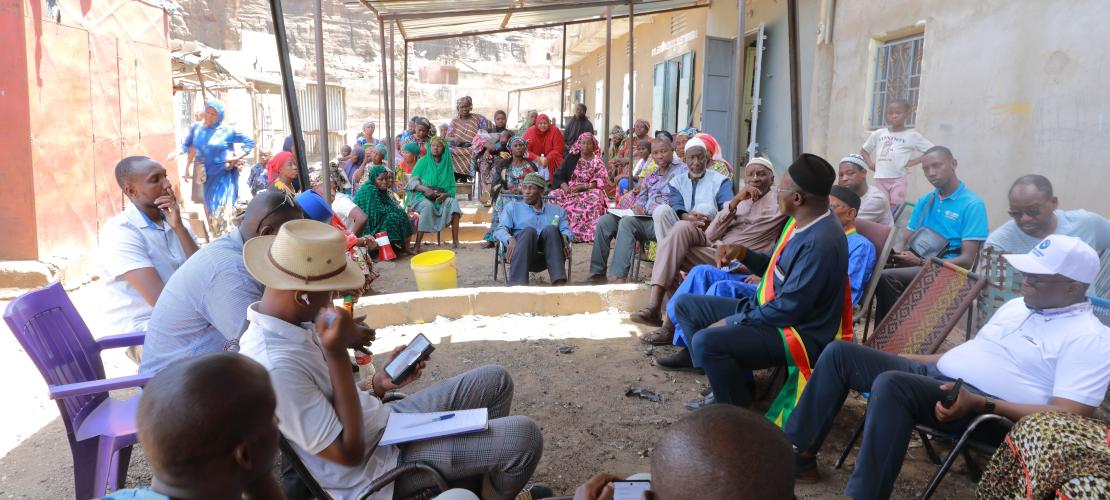
Between April 20th and 24th, 2026, the African Water Facility project team travelled to Bamako to assess and support the project implementation process. During this time, the team also had the opportunity to directly engage with some of the beneficiary communities in the Commune of Dogodouman.
Through local authorities and beneficiaries, the severe impact of water shortages and inadequate sanitation services on daily life was highlighted, with the Mayor of Dogodouman Commune, Mr. Ibrahima Koné, emphasizing the urgent need for improved water and sanitation infrastructure to support the requirements of the growing communities.
At the Talko II market, where construction of a borehole and latrine block is planned, Ms. Sidibé Animata Dramé, spokesperson for the market management committee, explained how the lack of sanitation facilities affects business activities and livelihoods and emphasized that the project comes at the right time. She went on to explained that the lack of latrines at the market limits the income of female vendors because, whenever the need arises, stallholders are forced to abandon their goods and seek toilet facilities from neighboring families, often causing conflict.
The mission also visited the Early Childhood Development Center (CDPE) and the “Les Lamballais” kindergarten, where teachers and school administrators stressed the urgent need for improved sanitation facilities for children, particularly given the increasing enrollment each year. The absence of adequate latrines and handwashing infrastructure continues to affect learning conditions, health, and overall well-being. The planned sanitation facilities will provide the children with a safer and healthier learning environment while information and education campaigns on good hygiene practices will strengthen this behavior from an early age.
Through meetings with community leaders in Dogodouman Basfond, the project team learned how the population relies on natural springs that often run dry during the dry season, forcing residents to spend valuable time collecting water from sources further away. A planned borehole will provide reliable access to sustainable and safe drinking water throughout the year, strengthening climate resilience within the population.
Once completed, the project will provide 40,000 people with access to safe drinking water services and 12,450 people with improved sanitation facilities. In addition, more than 333,000 people will benefit from hygiene and sanitation awareness campaigns.
As implementation progresses toward completion in December 2026, the African Water Facility continues to work with the Government of Mali and other development partners to mobilize financing for transformative and inclusive water sector investments in Mali.